
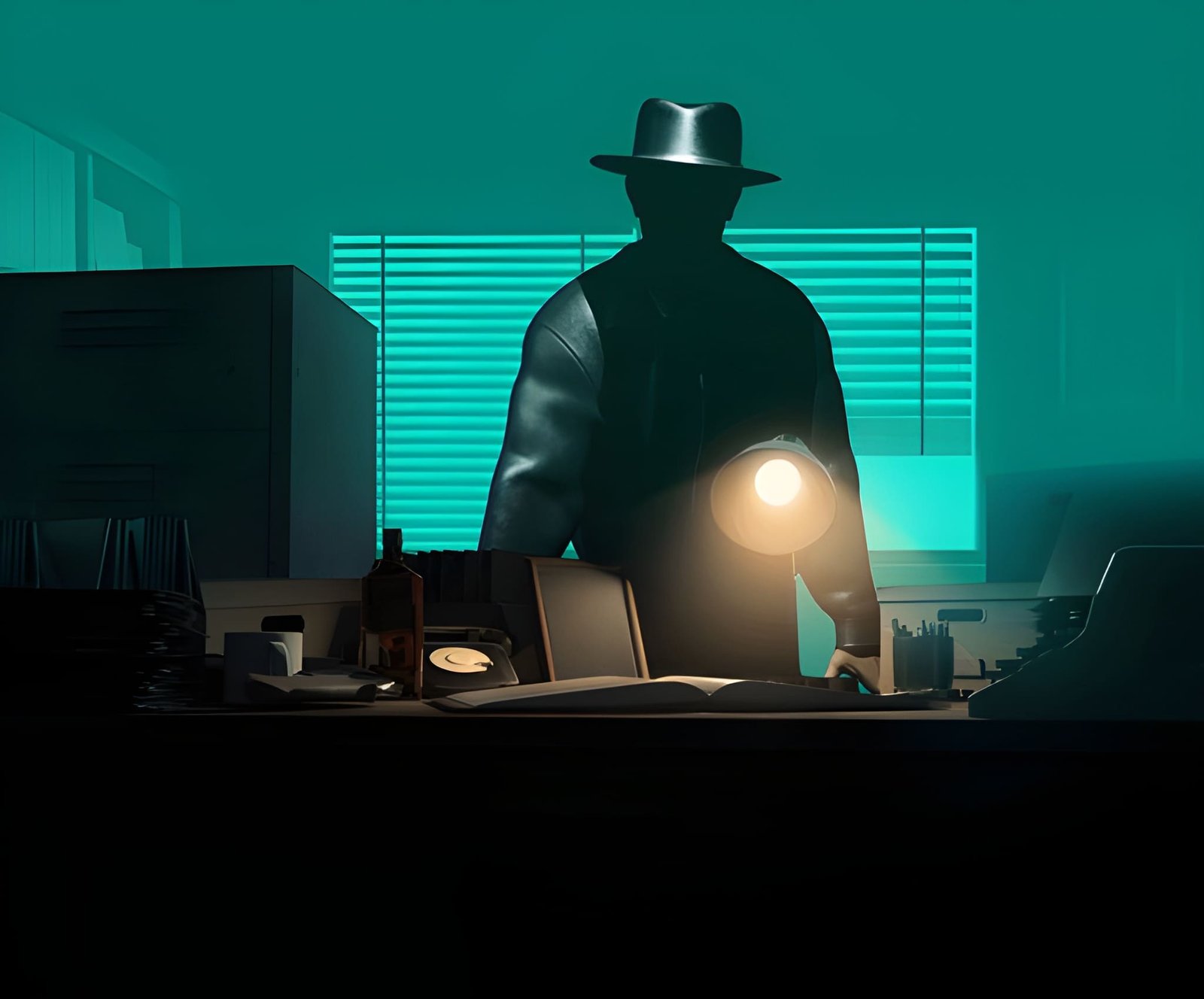
Some novels entertain. Thrillers possess. They commandeer a reader’s evening, cancel their sleep, and leave them sitting in their car in a parking lot because they cannot close the book before the next chapter ends.
That effect is not accidental. It is engineered through specific structural choices, deliberate pacing decisions, precisely calibrated tension, and characters whose survival the reader cannot afford to stop caring about. Writing a thriller novel that actually works requires understanding each of those elements and knowing how to deploy them in sequence.
This is the complete step-by-step guide — from the first idea to the final page. It covers everything competitors skim over: the real mechanics of suspense, what most writers get wrong about thriller structure, and the specific decisions that separate a gripping story from a forgettable one.
What makes a thriller different from every other genre
Before writing a single scene, understand what you’re writing. Thriller fiction is not simply a story with violence, a detective, or a fast pace. A thriller is defined by one thing above all others: the protagonist must stop something terrible from happening — and the reader must believe, genuinely and consistently, that they might not.
That is the thriller’s irreducible core. Everything else — the subgenre, the setting, the cast, the twists — is in service of that single mechanism: threat, urgency, and the credible possibility of failure.
This is where thriller writing tips from most guides miss the mark. They tell you to write fast and add plot twists. What they don’t tell you is that pace and twists are symptoms of something deeper — of a story whose stakes have been made real, whose protagonist has been made vulnerable, and whose threat has been made genuinely frightening. Get those foundations right and the pace takes care of itself.
The thriller genre sits distinct from mystery (which asks “who did it?”) and horror (which intends to frighten). Thriller fiction asks a different question: “Can they stop it in time?” The reader usually knows — or suspects — who the threat is. The dramatic tension is not whodunit but whether the protagonist can overcome it.
Step 1: Build your central threat — and make it personal
Every thriller novel begins with a threat. Not an abstract danger, not a vague sense of menace — a specific, concrete threat with identifiable consequences.
The strongest thriller story ideas share a quality that most writing advice overlooks: the threat must intersect with something the protagonist cannot walk away from. A bomb threat is scary in general. A bomb threat inside the building where the protagonist’s child is trapped is unbearable. The difference is not scale — it is personal relevance.
Before plotting a single scene, define:
- What is the threat? Be specific. Vague threats produce vague tension.
- What are the stakes? Who suffers if the protagonist fails, and how?
- Why can’t the protagonist walk away? The answer to this determines whether your reader will stay.
- Who is driving the threat? Your antagonist needs a coherent internal logic — a motivation that, however twisted, makes sense from inside their own worldview.
A villain who is simply evil produces shallow tension. A villain whose actions make terrible sense — who believes, with conviction, that they are justified — produces dread. The reader can’t dismiss that kind of threat as fiction.
Step 2: Create a protagonist worth following into danger
Thriller writing techniques go wrong when writers prioritize plot over people. A gripping story is only as gripping as the person at the center of it. Readers don’t finish thrillers because the plot is clever. They finish them because they cannot stop caring about what happens to a specific person.
Your protagonist needs three things to carry a thriller:
Competence with a fatal flaw. They must be capable enough that the reader believes they can succeed, and flawed enough that success is never guaranteed. A protagonist who is too capable produces no tension. One who is too broken produces no hope. The thriller lives in that narrow, pressurized space between the two.
Something to lose that isn’t just their life. Survival is a baseline stake in thrillers, but it is rarely sufficient on its own. The most compelling thriller protagonists are fighting to protect something beyond themselves — a relationship, a belief, an identity. When they face failure, the reader is not just worried about whether they survive, but about who they will be if they do.
Proactivity. Thriller protagonists must drive their own stories. A protagonist who only reacts to what happens to them produces a passive narrative. Even when they’re being hunted, they must be making decisions, taking risks, and creating their own forward momentum. Every scene should show them doing something — not simply having things done to them.
Step 3: Understand thriller novel structure
Thriller novels follow a three-act structure, but the internal mechanics of each act are specific to the genre.
Act One (25% of the novel): Establish the protagonist in their world, then shatter it. The inciting incident in a thriller is always the moment the threat becomes real and personal. Don’t spend Act One on backstory — get to the disruption as fast as the story allows. Introduce the antagonist’s presence, hint at the scale of the threat, and end Act One with a moment that locks the protagonist into the conflict with no viable exit.
Act Two (50% of the novel): This is where thriller plot development lives — and where most thriller novels collapse. Act Two must escalate continuously. Every chapter leaves the protagonist in a worse position than when it started. Every apparent breakthrough produces a new complication. The midpoint of Act Two should deliver a major reversal: either a false victory (things seem to be going well, then collapse) or a false defeat (things seem hopeless, then a new angle opens). By the end of Act Two, the protagonist should be at their lowest point — stripped of resources, allies, and certainty — facing the final confrontation with nothing but what they have become through the course of the story.
Act Three (25% of the novel): The final confrontation, the climax, and the resolution. Act Three in a thriller must be earned by everything that preceded it. The climax should feel both surprising and inevitable — an outcome the reader didn’t predict but couldn’t imagine being any other way.
One crucial structural element most thriller writing guides underemphasize: the false resolution. Just when the reader thinks the threat is defeated, it reasserts itself — from a direction no one anticipated. This is not a cheap trick. It is a structural convention of the genre that delivers a final surge of tension before the genuine resolution. Handle it with care: it must grow from the story’s internal logic, not arrive as a random external complication.
Step 4: Master the mechanics of suspense
Suspense is not the same as action. Action is what happens. Suspense is the reader’s anticipation of what might happen — and it is far more powerful than action itself.
Alfred Hitchcock explained it better than anyone: if two people are talking at a table and a bomb explodes, you have fifteen seconds of shock. But if the audience can see the bomb under the table while the characters talk about something unrelated, you have fifteen minutes of excruciating tension. The difference is information. Suspense is what happens when the reader knows something the character doesn’t — or when the character knows something terrible is coming but doesn’t know from which direction.
How to create tension in writing, scene by scene:
- Dramatic irony — let the reader see the threat the protagonist can’t see yet
- The ticking clock — establish a deadline with real consequences, then compress it
- Obstacles that cost something — every setback should damage the protagonist in a way that matters for the scenes ahead
- Withhold information deliberately — the reader doesn’t need to know everything; controlled uncertainty is suspense
- Use silence and stillness — the moments before violence are often more terrifying than violence itself
Writing suspense in novels also requires understanding the relationship between tension and release. A thriller that maintains maximum tension from page one to the last becomes numbing. Readers need moments of relative calm — brief respites — that make the next escalation hit harder. Comic relief, quiet character moments, and apparent progress all serve as controlled releases that make the tension that follows them more effective.
Step 5: Pacing — the craft element most writers get wrong
Pacing in thriller novels is not simply writing fast. It is controlling the reader’s experience of time, making some moments feel urgent and breathless, others slow and dread-filled, and knowing which effect each scene requires.
Sentence length is your primary pacing tool. Short sentences accelerate pace. Longer sentences slow it down and create room for dread to accumulate. During action sequences and moments of high urgency, tighten sentences to fragments. During the gathering of tension before a confrontation, let sentences breathe — let the reader feel the weight of what is approaching.
Chapter length matters. Short chapters increase pace and create more page-turning moments. Many bestselling thriller writers use extremely short chapters specifically to make “one more chapter” feel manageable — which is how readers end up awake at 3 AM. If your chapters are consistently long, consider where you can cut to a chapter break earlier, at a moment of unresolved tension.
Cut everything that doesn’t move the story forward. Thrillers have no tolerance for scenes that exist only for atmosphere, character development, or world-building. Every scene must do at least two things simultaneously. If it does only one, it is probably slowing your novel down.
Step 6: Writing plot twists that actually land
A plot twist that genuinely works produces two simultaneous responses in the reader: surprise and retrospective inevitability. They didn’t see it coming — but when they think back, the evidence was there. That double sensation is what separates a earned twist from a cheap one.
How to write plot twists that readers respect:
- Plant the seeds early. Every twist requires foreshadowing embedded in earlier scenes — details the reader noticed but didn’t register as significant. Go back to the beginning after plotting your twist and plant those seeds.
- Use misdirection, not deception. Misdirection draws the reader’s attention toward a plausible alternative explanation. Deception withholds information that the reader needed to play fair. Readers forgive misdirection. They resent deception.
- Let the twist change everything. A twist that doesn’t recontextualise earlier events is just a surprise. A twist that makes the reader rethink the entire story is a revelation. Aim for the latter.
- Don’t save everything for the end. A thriller peppered with smaller reversals and complications throughout is far more gripping than one that withholds its single big twist for the final chapter.
Red herrings deserve their own note. A red herring is a false lead that draws suspicion toward an innocent character or explanation. Used well, they add genuine complexity and make the eventual resolution more satisfying. Used carelessly, they frustrate readers and feel like wasted pages. Every red herring should serve the story independently — it should be interesting or significant in its own right, not merely a device to mislead.
Step 7: Write the two scenes you cannot get wrong
Out of the entire manuscript, two scenes carry disproportionate weight and must be executed with absolute precision.
The opening scene is your single most important page of writing. It sets the tone, establishes the genre contract, and determines whether a reader continues. A thriller opening must introduce urgency within the first paragraph. Not backstory, not scene-setting — urgency. Throw the reader into a moment of disruption, danger, or destabilization. Let them feel the threat before they fully understand it. The information can come later. The tension must come now.
The climactic scene is where every promise made across the entire novel must be fulfilled. The protagonist confronts the threat, and the outcome is determined by who they have become through the story — not by luck, coincidence, or an external rescue. The climax must feel earned by the 300 pages that preceded it. It must cost the protagonist something real. And it must deliver the emotional resolution the reader has been moving toward since page one.
Everything between these two scenes exists to make both of them land as powerfully as possible.
The gap competitors miss: character interiority in thrillers
The most underserved element in thriller writing guides — the gap that most articles skip entirely — is character interiority. The inner life of your protagonist is not just a literary flourish; it is a thriller mechanism.
When readers are inside a protagonist’s head during a moment of danger — feeling their reasoning, their fear, their calculation — the threat becomes real in a way external description cannot achieve. The reader is not watching the danger. They are experiencing it through a consciousness they’ve been inhabiting for hundreds of pages.
This is why the best thriller writers don’t just write action. They write the mental and emotional experience of a person under extreme pressure — the way fear distorts perception, the way decisions made in crisis reveal character in ways that ordinary circumstances never could. That interiority is what transforms a plot-driven thriller into a book a reader cannot put down.
Ready to Write a Thriller That Readers Can’t Escape?
Writing a thriller novel that genuinely holds readers — from the first line to the last — requires mastering structure, suspense, pacing, character, and plot simultaneously. It is one of the most demanding forms in commercial fiction. At Oscar Ghostwriting, we develop and ghostwrite thrillers with the precision the genre demands: tight structures, real tension, characters worth following into danger, and twists that land exactly as they should.
 Autobiography