
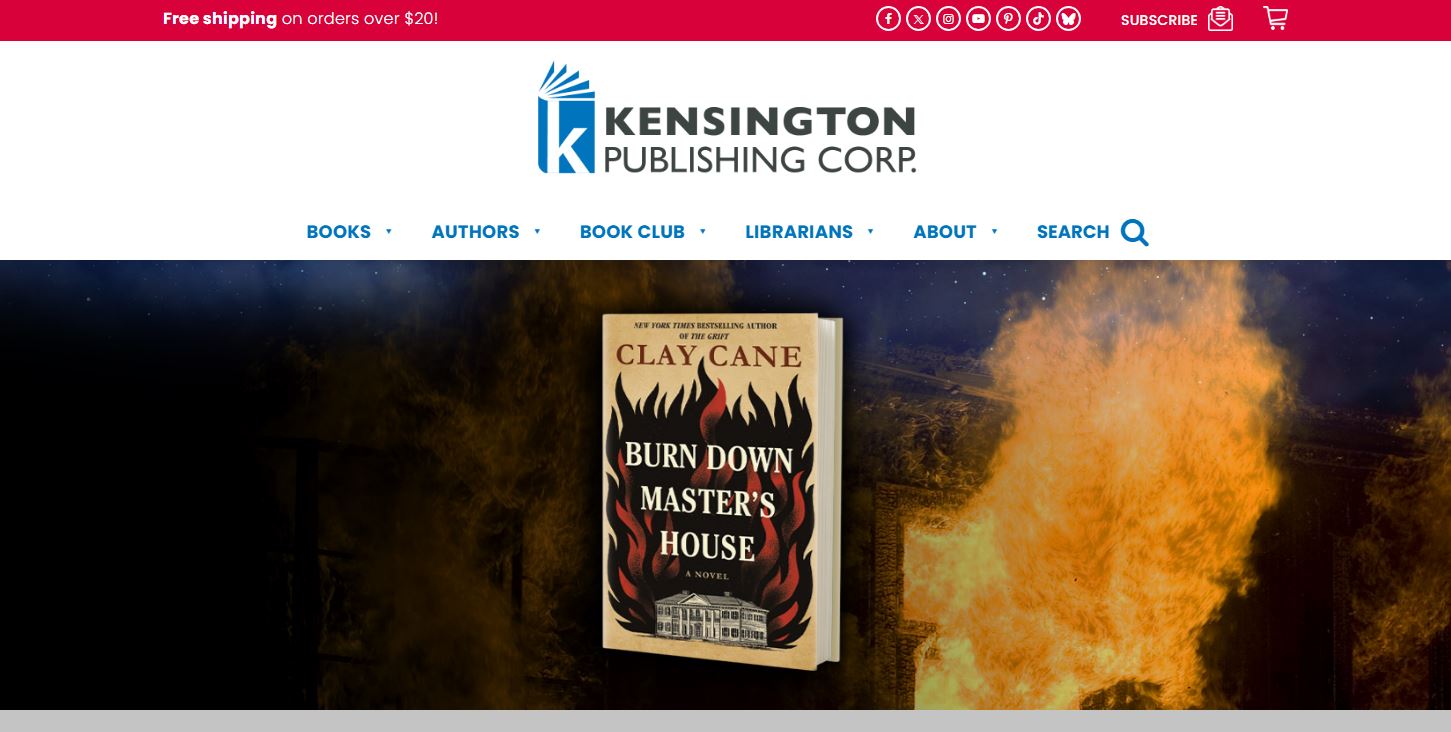
If you’re an aspiring author eager to break into traditional publishing, Kensington Publishing is a name worth understanding. In this guide, we’ll walk you through how to submit your book, what (if any) kentington submission cost exists, how to prepare your work, and whether Kensington is legit or a vanity publisher. We’ll also touch on any influencer-related opportunities connected to Kensington Books.
Have a Story Worth an Oscar-Level Script or Book?
Oscar Ghostwriting turns your ideas into powerful, professionally written books, scripts, and content—crafted to match your voice and vision.
Let’s dive in.
Who Is Kensington Publishing?
Kensington Publishing is one of America’s longest-standing independent publishing houses, based in New York City. It was founded in 1974 and today publishes hundreds of print and digital books across dozens of genres each year.
Kensington is known for its extensive list of imprints — including Kensington Books, Zebra Books, Pinnacle Books, Citadel Press, Dafina Books, and Lyrical Press — and for publishing commercial fiction and nonfiction that appeal to mainstream readers.
Imprints focus on different areas, such as romance, thrillers, mysteries, historical fiction, and narrative nonfiction. Kensington’s titles regularly appear in bookstores and online retailers, and its books are distributed globally.
Is Kensington Publishing Legit?
Many first-time authors understandably ask: “Is Kensington Publishing legit?”
Yes — Kensington Publishing is a legitimate traditional publisher with decades in the industry. It is a well-known independent house in the U.S. market, publishes a wide catalog of titles, and distributes books through major retail channels.
A domain and security review also ranks the company’s official website as safe and reputable.
Here’s what this means in practical terms:
- Kensington does not operate like a scam or fly-by-night outfit.
- It has published successful and widely read books.
- Authors with Kensington contracts have their work professionally edited, marketed, and distributed.
However — and this is important — being a legitimate publisher doesn’t mean every part of their publishing process is open to all authors in the same way (we’ll explain this further below).
Is Kensington Publishing a Vanity Press?
A fundamental difference in publishing is between traditional publishers and vanity presses.
A vanity press charges authors money up front to publish their work and doesn’t take on financial risk themselves. These companies usually provide minimal editorial or marketing support and make money by selling publishing packages directly to authors.
Kensington Publishing, on the other hand, does not require authors to pay to be published if you are accepted through traditional editorial channels. They invest in the books they acquire, which is a hallmark of traditional publishing rather than vanity publishing.
That said, some third-party companies and programs claim association with Kensington or use their name in ways that might confuse authors — but that’s a separate issue and not representative of Kensington’s core business.
So, in short:
✔ Kensington is not a vanity press.
✔ It operates by acquiring manuscripts and paying authors through contracts.
✔ It bears the costs of publication instead of charging authors.
Kensington Book Submission: How to Submit Your Manuscript
1. Submission Basics
Kensington accepts unsolicited submissions, meaning you can submit without an agent — a relatively rare opportunity among traditional publishers.
Here’s how it works:
- Query first: Write a concise query email to a specific editor.
- No attachments at first: Kensington asks that you do not attach your full manuscript or proposal to the initial email — only the query letter goes in the email body.
- Query only one editor: Aim your submission at the editor who focuses on your genre; if they pass, Kensington considers that a rejection and does not want resubmissions to other editors.
- Wait time: Allow at least three months for a response. Most publishers are slow due to the volume they receive.
If an editor is interested based on the query, they will request a manuscript attachment to review. From there, the editorial team decides whether to offer a contract.
2. Submission Content Tips
A strong submission begins with a professional query:
- Hook paragraph: A one- or two-sentence summary of your book that hooks the reader.
- Brief synopsis: A short outline of your plot (for fiction) or content (for nonfiction).
- Bio: A short author introduction with any credentials, expertise, or writing background.
Avoid sending the entire manuscript unless requested. Kensington’s guidelines specifically say emailed manuscripts will be deleted.
3. Genre & Imprint Considerations
Kensington’s editorial teams focus on particular areas. For example:
- Fiction ranges from romance and historical to thrillers.
- Nonfiction includes true-crime, biography, pop culture, and special interest topics.
- Some imprints such as Lyrical Press also accept certain fresh submissions.
Before you email, check their lists of editors and what each one is looking for. This clarity increases your chances of a positive response.
Kensington Submission Cost: How Much Does It Cost?
One of the most frequent questions authors ask is: “Is there a kensington submission cost to send my book?”
Here’s the bottom line:
Kensington Publishing does not charge authors to submit their manuscripts.
There is no fee to query, review, or publish if Kensington acquires your work through its editorial process. This aligns with traditional publishing practices where the publisher bears publishing costs and pays the author royalties or advances.
This is very different from vanity or hybrid publishers that may ask for fees upfront. Traditional publishers like Kensington invest their own resources in editing, design, production, and distribution.
So:
✔ No upfront submission cost
✔ No manuscript reading fees
✔ No required payment at contract time
Bear in mind, if someone approaches you claiming to represent Kensington but asks for money, treat that with caution — it may not be legitimate or could be misrepresenting the relationship.
What Happens After Submission?
If Kensington expresses interest, they may:
- Request your full manuscript in a particular format (often Word).
- Review it with internal editors and possibly external readers.
- Decide whether to offer a publishing contract with terms for royalties and advance if applicable.
Traditional publishing contracts typically include:
- Royalties: A percentage of sales paid to the author.
- Advance: Sometimes an upfront payment against future royalties (not always publicized).
- Rights: Terms outlining what rights the publisher acquires (e.g., print, ebook).
A contract offer can vary widely and it’s wise to review with an agent or publishing lawyer if possible.
Does Kensington Have a Book Influencer Program?
While Kensington doesn’t widely advertise a traditional influencer program akin to a formal book ambassador scheme, there are some related activities:
- Authors and publishers like Kensington often engage with reviewers or influencers through NetGalley and other review platforms where reviewers can request ARCs (Advance Reader Copies).
- Kensington itself highlights media contact opportunities, including reviewers and influencers, through their contact points for press and promotions.
- Some specific book campaigns (like the Hell Bent series) have street team/influencer engagement opportunities where fans and content creators can join efforts to promote titles.
- Kensington books have been associated with influencers in various sponsored content collaborations online, indicating that the publisher does engage in influencer outreach at times.
These opportunities aren’t formalized as a universal “Kensington Books influencer program,” but authors and creators can sometimes connect with Kensington titles through promotional outreach or independent collaborations.
Tips to Improve Your Chance of Getting Published
1. Tailor Your Query
Avoid generic queries. Address your email to the editor who matches your genre. Kensington explicitly says to submit to one editor and not resubmit to others if rejected.
2. Follow Submission Rules Exactly
Kensington is clear that unsolicited email with attachments is deleted. Your initial email should be a query letter only.
3. Be Patient
The editorial process often takes months — your inbox may stay silent if a project isn’t a good fit at the moment.
4. Get Feedback First
Before submitting, get manuscript feedback from trusted critique partners or professional editors to make your work as strong as possible.
Final Summary
Kensington Publishing is a reputable, independent, and traditional book publisher based in New York with a long history of publishing mainstream fiction and nonfiction titles.
✔ Is Kensington Publishing legit? Yes — it’s a well-established traditional publishing house.
✔ Is Kensington Publishing a vanity press? No — they do not charge authors to publish books through their editorial process.
✔ Kensington book submission guidelines require querying editors with a tailored pitch and only sending full manuscripts upon request.
✔ Kensington submission cost: There is no cost for querying or traditional submission.
✔ Influencer opportunities: While not a formal influencer program, marketing and promotional engagements exist through book campaigns, ARCs, and online collaborations.
If you approach Kensington with a strong project and a professional query, you’re entering a respected avenue of traditional publishing with real editorial standards and industry placement.
 Autobiography