
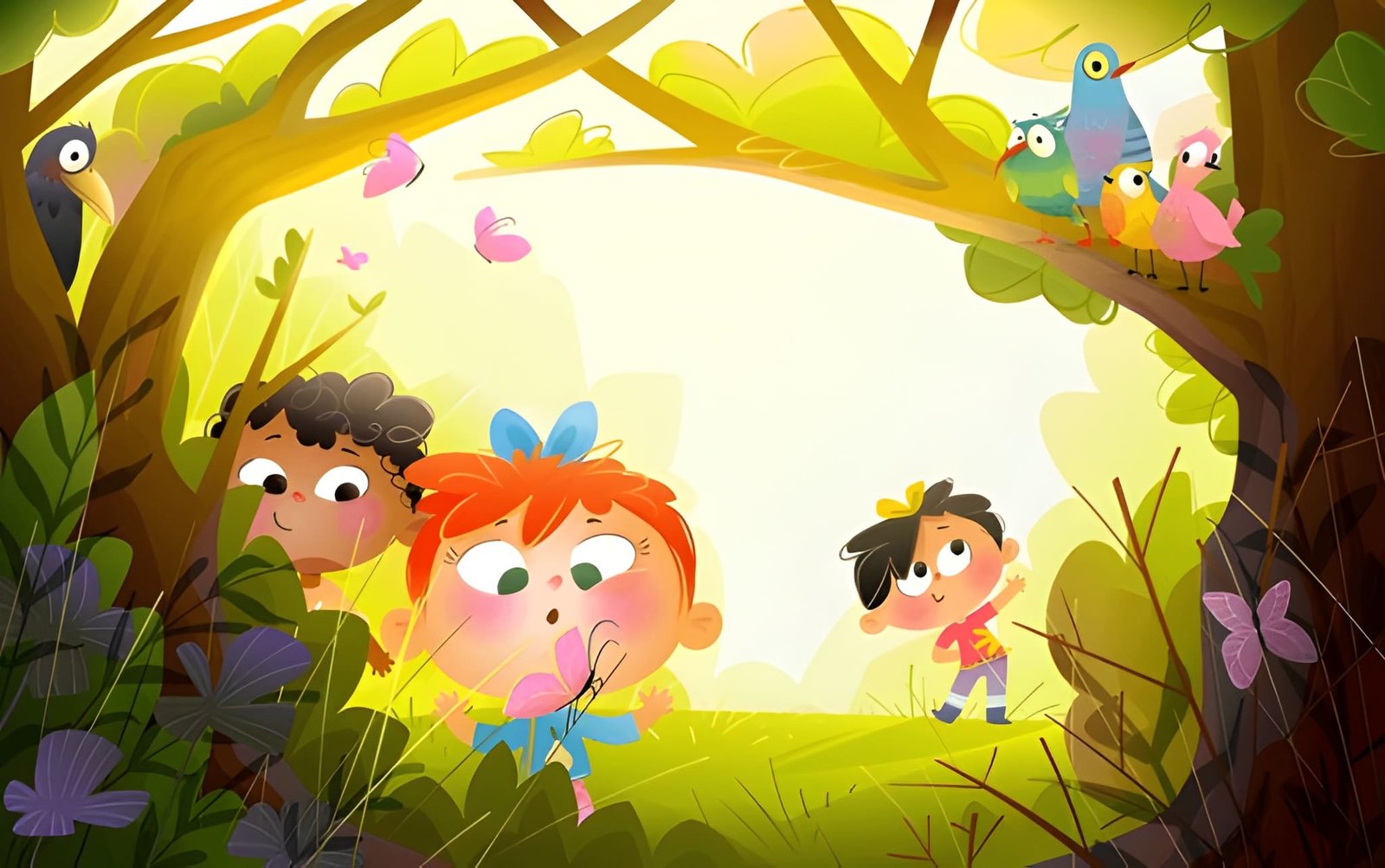
You’ve written your children’s book. The story is there — the characters, the words, the rhythm that makes a child lean forward and beg for one more page. But without illustration, it doesn’t exist in the form readers need. And the first question every author asks at this stage is always the same: how much is this going to cost?
Children’s book illustration pricing in 2026 is one of the most misunderstood cost categories in self-publishing. Authors encounter quotes ranging from $200 for a complete picture book to $25,000 for a single project — and both can be real, legitimate numbers depending on what’s being commissioned and from whom. The gap isn’t arbitrary. It reflects enormous differences in illustrator experience, artistic style, illustration complexity, commercial rights, and the specific demands of different children’s book formats.
This guide gives you the full picture. We break down per-page illustration costs by illustrator tier, style type, and book format; explain every factor that affects your final quote; compare platforms and sourcing options; and give you a realistic total budget framework for your specific project. By the end, you’ll know exactly what to expect — and how to get the best result for your investment.
Why Children’s Book Illustration Pricing Varies So Dramatically
Before looking at specific numbers, it’s important to understand why the range is so wide. Children’s book illustration is not a commodity service — it’s original artwork created from scratch for a specific narrative, in a specific style, for a specific audience. Every element of that process affects the price.
The Core Factors That Drive Illustration Cost
- Illustrator experience and career stage — a debut illustrator building their portfolio charges very differently from a mid-career professional or an illustrator whose work has appeared in traditionally published titles
- Illustration style — detailed, fully rendered full-color spreads cost more than simple, flat-color character illustrations; watercolor and oil-painted textures cost more than clean digital line art
- Number of illustrations required — a 32-page picture book with 16 full spreads is a completely different scope from a 64-page early reader with spot illustrations on every third page
- Complexity per illustration — a single character on a white background costs less than a detailed scene with multiple characters, environmental elements, dynamic action, and expressive detail throughout
- Commercial rights and licensing — illustrations commissioned for a self-published book that will sell commercially require full buyout of rights; illustrations for personal or limited-edition use can sometimes be licensed more affordably
- Platform and sourcing method — illustrators hired through premium agencies or professional networks charge more than those found on budget freelance platforms; the difference in quality and reliability typically justifies the premium
- Revision rounds and turnaround time — standard illustration timelines run 3–8 months for a full picture book; rush work adds 25–50% to base rates
Important Reality Check: The single biggest mistake authors make when budgeting for children’s book illustration is comparing per-page rates without accounting for complexity. A quote of $100 per page for simple character spots and $100 per page for fully rendered double-page spreads are not equivalent — the latter represents ten times the artistic labor. Always ask what’s included in a per-page rate before using it to compare quotes.
Children’s Book Illustration Cost Per Page: 2026 Breakdown by Tier
The following rates reflect current market pricing in 2026 across the major tiers of illustrator experience and sourcing method. Rates are shown as per-page (single page) costs for standard full-color children’s book illustrations at typical complexity levels.
Tier 1: Student / Entry-Level Illustrators ($25–$100 per page)
Student illustrators and recent art school graduates represent the lowest-cost option in the market. Some produce genuinely attractive work and are building a portfolio actively, which means they may accept projects at rates that experienced professionals would not consider. The trade-off is reliability — student illustrators may underestimate project timelines, struggle with revision requests, or produce work that looks inconsistent across a full manuscript.
- Single character on plain background: $25–$50/page
- Simple scene with 1–2 characters and minimal background: $50–$85/page
- Full scene with environment and multiple elements: $75–$120/page
- Full double-page spread: $120–$200
Best for: Personal projects, family gifts, limited-edition books with small print runs, or authors who have found a specific student artist whose style perfectly matches their vision and are comfortable with the higher risk profile.
Risk Warning: Student illustrators frequently underquote their work and then struggle to complete a full picture book at the agreed price. Before committing, ask to see a complete project they’ve finished — not just individual samples — and establish a clear milestone payment structure rather than paying upfront.
Tier 2: Emerging Professional Illustrators ($100–$300 per page)
Emerging professionals have completed at least one or two full children’s book projects, have a coherent and developed style, and understand the practical demands of commercial illustration — consistent character design across pages, perspective continuity, and working with author feedback professionally. This is the entry point for authors pursuing genuine commercial publication.
- Simple full-color character illustration: $100–$150/page
- Standard scene with background and 2–3 characters: $150–$200/page
- Complex scene with detailed environment and character interaction: $200–$300/page
- Full double-page spread at standard complexity: $250–$450
Best for: Self-published authors who want professional-quality illustrations at a manageable cost. This tier produces commercially viable results for authors publishing on KDP, IngramSpark, or similar platforms.
Tier 3: Established Professional Illustrators ($300–$700 per page)
Established professionals have a track record of completed books — possibly including traditionally published titles — a strong and distinctive style, and the experience to manage a full picture book project independently. They deliver consistent, publication-quality work with efficient communication and clear workflows. This is the tier at which a children’s book begins to look genuinely competitive with traditional publishing output.
- Standard full-color single-page illustration: $300–$450/page
- Complex scene with rich background detail and multiple characters: $400–$600/page
- Full double-page spread with high detail: $500–$900
- Character design package (style guide + 3–5 character sheets): $500–$1,500 flat
Best for: Authors investing seriously in commercial self-publishing, authors targeting bookstore distribution, and authors building an illustrated book series where consistent, distinctive illustration quality is central to the brand.
Tier 4: Premium and Award-Winning Illustrators ($700–$2,000+ per page)
At the premium tier, you’re commissioning from illustrators whose work has appeared in major traditionally published titles, who have won or been shortlisted for industry awards (Caldecott, Kate Greenaway), and whose distinct artistic style carries its own market recognition. These illustrators are often booked 12–24 months in advance and are selective about the projects they take on.
- Single-page illustration: $700–$1,200/page
- Complex scene or character-rich composition: $1,000–$1,800/page
- Full double-page spread: $1,500–$3,000+
- Total project cost for a 32-page picture book: $15,000–$60,000+
Best for: Authors with premium budgets, publishers seeking award-caliber illustration, and high-profile branded projects where the illustrator’s name carries commercial value.
Per-Page Cost by Illustration Style
Illustration style is one of the most significant cost variables — and it’s one that authors rarely account for when comparing quotes. Different styles require fundamentally different amounts of time and skill to produce at a professional level.
| Illustration Style | Description | Typical Per-Page Cost | Total Cost (32-page book) |
| Flat digital / vector | Clean lines, solid fills, minimal shading; modern and graphic | $80–$200/page | $2,500–$6,000 |
| Simple watercolor | Loose, expressive watercolor with organic texture; warm and classic | $150–$350/page | $4,500–$11,000 |
| Detailed digital paint | Fully rendered, painterly digital illustration with complex lighting | $200–$600/page | $6,000–$19,000 |
| Traditional watercolor | Hand-painted original art; scanned and digitally prepared for print | $250–$700/page | $8,000–$22,000 |
| Pencil / ink + color | Hand-drawn line art with digital or traditional color overlay | $150–$400/page | $4,500–$13,000 |
| Collage / mixed media | Layered textures, cut-paper aesthetic, complex composition | $200–$500/page | $6,000–$16,000 |
| 3D CGI / rendered | Three-dimensional rendered scenes; high-end production look | $400–$1,200/page | $12,000–$38,000 |
| Character spot illustrations | Small, isolated character images without full background setting | $50–$200/each | $1,500–$6,000 (30 spots) |
Total Illustration Budget by Book Type
Different children’s book formats have very different illustration needs — in terms of number of pages, illustration density, and the complexity level appropriate to their readership. Here’s what authors can realistically expect to spend on illustration for each major format.
Picture Books (Ages 3–7)
Picture books are the most illustration-intensive format in children’s publishing. A standard picture book runs 32 pages, with illustrations on every page — typically 14–16 full double-page spreads and several single-page or half-page compositions. The illustration IS the book; text is secondary.
- Entry-level (student/emerging): $2,500–$6,000 total
- Mid-range (emerging professional): $5,000–$10,000 total
- Professional quality: $10,000–$20,000 total
- Premium / traditional publishing level: $20,000–$60,000+ total
Industry Standard: The Society of Children’s Book Writers and Illustrators (SCBWI) reports that advances paid to illustrators by traditional publishers for a standard 32-page picture book range from $5,000 to $15,000. This figure — which represents what publishers pay for professional illustration — is a useful benchmark for what professional-quality self-published illustration should cost.
Early Readers / Chapter Books (Ages 6–9)
Early readers use illustrations to support text comprehension and maintain engagement. They are not as illustration-dense as picture books — typically one full-page or half-page illustration per chapter, plus spot illustrations throughout. This format is significantly more affordable to illustrate than a picture book at the same quality level.
- 8–12 chapter illustrations (full page): $800–$5,000 total
- Spot illustrations (20–30 per book): $1,500–$6,000 total
- Combined chapter + spot package: $2,000–$8,000 total
Middle Grade Illustrated Novels (Ages 8–12)
Middle grade illustrated novels — think the classic Wimpy Kid or Big Nate format — use illustrations throughout the text but at varying densities. Some are heavily illustrated on every page; others use illustrations primarily for chapter breaks and key moments.
- Heavily illustrated (Wimpy Kid style): $8,000–$25,000+ total
- Moderately illustrated (chapter breaks + key scenes): $3,000–$10,000 total
- Lightly illustrated (chapter headers + selected scenes): $1,500–$5,000 total
Board Books (Ages 0–3)
Board books are short (12–24 pages typically) but require extremely bold, simple, and highly legible illustration. The small page count means lower total cost, but the design discipline required — illustration that reads clearly at very small size, with maximum color contrast — is demanding. Board book illustration rates are comparable to picture books on a per-page basis.
- Entry-level: $1,500–$4,000 total
- Professional: $4,000–$10,000 total
| Book Format | Page Count | Illustrations Needed | Entry-Level Total | Professional Total |
| Picture book (32pp) | 32 pages | 16 spreads + singles | $2,500–$5,000 | $10,000–$20,000 |
| Board book (12–24pp) | 12–24 pp | 10–20 full-page | $1,500–$4,000 | $4,000–$10,000 |
| Early reader (48–64pp) | 48–64 pp | 8–12 chapter + spots | $800–$3,000 | $3,000–$8,000 |
| Chapter book (80–120pp) | 80–120 pp | 10–20 spot/chapter | $1,500–$4,500 | $4,500–$12,000 |
| Middle grade illustrated | 150–250 pp | 50–200+ illustrations | $5,000–$12,000 | $15,000–$40,000 |
Where to Find Children’s Book Illustrators: Platform Comparison
Where you find your illustrator matters as much as what you pay them. Different platforms attract different quality tiers, carry different vetting standards, and come with different levels of protection for both the author and the illustrator.
| Platform / Source | Price Range | Quality Range | Vetting | Best For |
| Reedsy | $3,000–$20,000/project | High | Vetted — all reviewed | Authors wanting vetted, professional illustrators |
| 99designs | $299–$2,000/project | Medium–High | Portfolio-based | Authors wanting multiple concepts before committing |
| Fiverr (budget) | $50–$500/project | Low–Medium | None | Testing concepts; very limited budgets |
| Fiverr Pro | $500–$5,000/project | Medium–High | Pro badge vetting | Mid-budget authors willing to vet carefully |
| Upwork | $500–$10,000/project | Low–High (wide) | Portfolio review only | Authors comfortable with freelancer vetting process |
| SCBWI Illustrator Directory | $5,000–$25,000+ | High | Industry membership | Authors who want children’s publishing specialists |
| Dribbble / Behance | $2,000–$15,000+ | High | None (self-posted) | Authors who know what style they want and can identify it |
| Full-service agency | $5,000–$25,000+ | High | Agency-curated roster | Authors wanting managed illustration project |
Strongest Recommendation: For first-time children’s book authors, working through a full-service agency that manages the illustration process — including illustrator sourcing, contract management, revision coordination, and final file delivery — is almost always worth the additional cost. Managing an illustrator relationship for a 32-page picture book is a multi-month project management commitment that most authors significantly underestimate. Oscar Ghostwriting’s children’s book packages include managed illustration coordination as part of the service.
What a Professional Illustration Contract Should Include
Before any illustration work begins, you need a clear written contract. This is not optional — it is the document that protects your rights, defines the deliverables, and establishes what happens when things go wrong. Here is what every professional children’s book illustration contract should cover.
Rights and Ownership
The contract must explicitly state that upon final payment, you own full commercial rights to all illustrations created for your book. This includes the right to publish in all formats (print, digital, audiobook), in all territories, and in all editions. It should also confirm that the illustrator cannot reuse the illustrations for other clients. Some illustrators retain the right to display the work in their portfolio — this is standard and acceptable, provided commercial reuse is prohibited.
Deliverables and File Specifications
The contract should specify exactly what files you receive at the end of the project: typically high-resolution TIFF or PNG files at 300 DPI minimum for print, RGB color mode, sized to your book’s trim dimensions. If you need layered source files (PSD or AI), specify this upfront — some illustrators charge extra for layered file delivery.
Revision Rounds
Specify how many revision rounds are included at each stage — typically two rounds of revisions at the sketch/rough stage and one round of revisions at the final color stage. Revisions beyond those included should be priced in the contract (typically $50–$200 per additional revision round depending on the illustrator’s rate).
Payment Schedule and Milestones
Never pay the full fee upfront. Standard milestone structures for illustration projects: 25–33% deposit upon signing; 33% upon approval of sketches/roughs; final payment upon delivery of completed files. This protects you if the illustrator fails to deliver and protects the illustrator against non-payment.
Timeline and Delivery Date
The contract must include a specific delivery date for each milestone and the final completed files. Include a clause specifying what happens if deadlines are missed — typically a grace period of 2–4 weeks before the contract can be terminated with partial refund. Projects without contractual deadlines routinely run months over schedule.
Hidden Costs in Children’s Book Illustration
The per-page illustration rate is only one part of your total illustration budget. These additional costs catch first-time authors off guard more often than almost any other aspect of children’s book production.
Character Design Package
Most illustrators charge separately for character design before the full illustration work begins. This process — developing the visual identity of your main characters, establishing their proportions, expressions, color palette, and costume across multiple reference poses — is the foundation that ensures consistency across the entire book. Character design packages typically cost $300–$1,500 depending on the number of characters and the illustrator’s rate. This is separate from your per-page illustration fee.
Cover Illustration
The cover of a children’s book is typically commissioned and priced separately from interior illustrations. Cover illustration commands a premium over interior pages because of its marketing importance — expect to pay 1.5–2× your standard per-page rate for a cover illustration, plus additional charges for spine and back cover design.
Color Correction and Print Preparation
Illustrations created for screen display are in RGB color mode. Print requires CMYK conversion, which can shift colors significantly. Professional color correction to ensure your illustrations print accurately — matching the vibrant colors of the digital originals — is often not included in the base illustration fee. Budget $200–$600 for professional print preparation of a complete picture book’s worth of illustrations.
Spot Illustration Discounts
Many illustrators offer a reduced rate for spot illustrations — small, isolated character images without full background scenes — compared to full-page compositions. If your book uses spot illustrations extensively, ask about spot rates specifically, as they can be 30–50% lower than full-page rates.
Factors That Increase Your Per-Page Illustration Cost
| Factor | Typical Additional Cost | Notes |
| Rush delivery (under 8 weeks) | +25–50% on base rate | Most picture books take 4–8 months; anything faster costs significantly more |
| High character count per page | +15–30% per additional character above 2 | Each additional character adds composition and rendering time |
| Non-standard book trim size | +10–20% for setup | Custom trim sizes require additional layout work from the illustrator |
| Highly detailed backgrounds | +20–40% per spread | Dense environmental illustration (crowds, cityscapes, forests) is labor-intensive |
| Night / low-light scenes | +15–25% | Complex lighting scenarios take longer to render convincingly |
| Animal characters with realistic anatomy | +15–30% | Anatomically accurate animals require specialist reference and skill |
| Period or cultural costume accuracy | +10–25% | Historical or culturally specific clothing requires research and accuracy |
| Full-bleed illustration (edge to edge) | +5–15% | Extending illustration to page edge requires additional composition planning |
How to Get the Best Illustration Value for Your Budget
Working within a realistic budget doesn’t mean settling for lower quality — it means making smarter choices about where to invest and where to simplify.
Reduce Scene Complexity Without Reducing Quality
One of the most effective ways to manage illustration costs is to write scenes that are emotionally rich but compositionally simple. A single character with an expressive face against a minimal background can be more powerful — and significantly cheaper — than a crowded, detailed scene. Work with your illustrator early to identify which moments in your story deserve full-scene treatment and which can be handled more simply.
Use a Consistent, Minimal Palette
Illustrations with a restrained, consistent color palette are faster to produce than those requiring complex color mixing, gradient work, or highly varied environmental colors. Communicating a preferred palette to your illustrator upfront — warm earth tones, cool blues and greens, bold primaries — can reduce rendering time without affecting the visual impact of the book.
Hire an Illustrator Mid-Career Rather Than at the Top
The best value on this list consistently lives in Tier 3 — established professionals who have completed real book projects but haven’t yet reached the point where demand allows them to charge top-tier rates. An illustrator with 3–5 completed picture book credits, a strong portfolio, and positive client testimonials delivers professional-quality output at rates 30–50% below premium illustrators — without the quality trade-off of entry-level work.
Commission Character Design First
Before committing to a full illustration contract, commission only the character design package from your prospective illustrator — typically $300–$800. This gives you real deliverables to evaluate before signing the full project contract, reduces your financial risk if the style doesn’t match your vision, and ensures the illustrator’s character design sensibility aligns with your book’s emotional tone.
Oscar Ghostwriting Tip: The most expensive illustration mistake authors make is hiring the cheapest available illustrator and then paying for re-illustration when the results don’t meet commercial publishing standards. Budget honestly from the start — a professional-quality picture book illustration package in the $8,000–$15,000 range produces a product that can compete in bookstores and on Amazon. An under-illustrated book at $2,000 often needs to be re-done entirely, doubling the total cost.
Frequently Asked Questions About Children’s Book Illustration Costs
How many illustrations does a 32-page picture book need?
A standard 32-page picture book has illustrations on every page — but ‘pages’ in publishing terms counts differently from a physical page count. A typical 32-page picture book contains 14–16 double-page spreads (where one illustration covers both facing pages), plus several single-page or smaller compositions for title pages, dedication pages, and chapter openings. When getting quotes, always specify the exact number of full spreads, single pages, and any spot illustrations separately.
Can I use AI-generated art for my children’s book?
Technically yes — but with significant complications. As of 2026, AI-generated images face ongoing copyright uncertainty in many jurisdictions, which creates legal risk for commercial publishing. More practically, AI illustration tools struggle to maintain consistent character appearance across multiple pages — a critical requirement for picture books. Amazon KDP has also implemented stricter review processes for books using AI-generated art. For any book intended for commercial publication, human illustrators remain the standard and the most reliable choice.
How long does children’s book illustration take?
A full 32-page picture book illustrated by an experienced professional takes 3–6 months from contract signing to final file delivery. This includes: 2–4 weeks for character design and approval, 4–6 weeks for rough sketches of all pages, 2–3 weeks for revisions and sketch approval, 8–12 weeks for final color rendering, and 2 weeks for final revisions and file preparation. Rush projects compressing this to under 8 weeks typically add 25–50% to the total cost.
Do I own the illustrations after I pay for them?
Only if your contract explicitly says so. Never assume ownership — always confirm in writing that you are receiving a full commercial rights buyout upon final payment. Without this clause, the illustrator may retain significant rights to their work, including the right to prevent republication or to license the illustrations to other parties. This is a non-negotiable contract requirement for any children’s book intended for commercial publication.
Should I find the illustrator before or after I finish writing?
Ideally, your manuscript should be finalized — or nearly so — before you commission an illustrator. Significant text changes after illustration begins can render completed pages obsolete and require costly re-illustration. That said, many children’s book authors benefit from an early illustrator consultation before the manuscript is locked, because a skilled illustrator may identify visual storytelling opportunities in the text that the author hasn’t considered. The best approach: complete your manuscript, get editorial feedback, revise, and then commission your illustrator with a final or near-final text.
What’s the difference between self-publishing and traditional publishing illustration costs?
In traditional publishing, the publisher pays the illustrator directly — typically an advance of $5,000–$15,000 for a debut picture book, with royalties shared between author and illustrator thereafter. The author pays nothing for illustration. In self-publishing, you pay the full illustration cost upfront and retain full royalties from sales. The financial risk is higher in self-publishing, but so is the potential return — and you retain full creative control over the illustration style and direction.
Need Professional Illustration for Your Children’s Book?
Oscar Ghostwriting connects children’s book authors with vetted, genre-experienced illustrators across every style and budget level. Our managed illustration packages include character design, full-book illustration, contract management, and print-ready file delivery — so you can focus on your story while we handle the art. Request a free consultation and quote today.
 Autobiography