
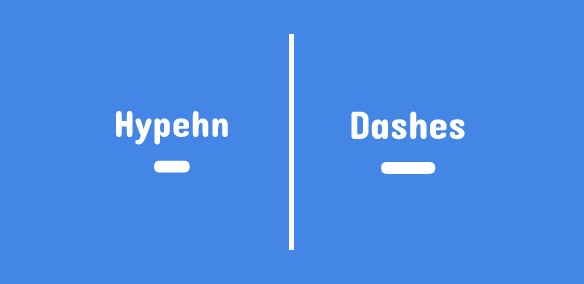
If you’ve ever stared at a sentence wondering whether you need a tiny little line (-) or a longer one (—), you’re not alone. Hyphens and dashes are two of the most commonly confused punctuation marks in English, and honestly, nobody would blame you for mixing them up. They look almost identical at a glance, and most keyboards don’t make it easy to tell them apart.
But here’s the thing: they do completely different jobs. A hyphen connects words. A dash connects ideas. Using one where the other belongs can confuse your reader, muddy your meaning, or just make your writing look a little off.
The good news? Once you understand the basic logic behind each one, picking the right mark becomes almost instinctive. In this post, we’ll walk through exactly when you need a hyphen, when you need a dash, how to tell the difference quickly, and a few mistakes that trip up even experienced writers.
Let’s start small — literally.
What Is a Hyphen?
A hyphen (-) is the shorter of the two marks. You’ll find it on your keyboard without any special shortcuts — it’s the key right next to the zero. Its job is simple: it connects words that need to be read as a single unit.
Think of a hyphen as a tiny bridge between words. When two or more words work together to create one meaning, the hyphen holds them in place so your reader doesn’t stumble.
There are no spaces on either side of a hyphen. It sits snugly between the words it’s joining, like this:
well-known, sugar-free, up-to-date
Now let’s look at the specific situations where you’ll need one.
When Do You Use a Hyphen?
1. Compound Adjectives Before a Noun
This is the most common reason you’ll reach for a hyphen. When two or more words team up to describe a noun — and they come before that noun — they usually need a hyphen to show they belong together.
For example:
She adopted a well-behaved dog.
Without the hyphen, “well” and “behaved” could feel like two separate descriptors floating around without purpose. The hyphen tells your reader: these two words are a package deal. Together, they describe the dog.
Here are a few more:
a high-speed chase a part-time job a last-minute decision an over-the-top reaction
Now here’s the part that trips people up: you only need the hyphen when the compound adjective comes before the noun. If it comes after, you can usually drop it.
Compare:
She adopted a well-behaved dog. ✅ The dog was well behaved. ✅ (no hyphen needed)
Why? Because when the adjective comes after the noun, there’s no risk of confusion. The sentence structure already makes the meaning clear. The hyphen’s job is to prevent misreading — and if there’s nothing to misread, it can clock out early.
2. Compound Nouns
Some compound nouns — words made from two smaller words — also use hyphens. These are words that haven’t fully merged into one word yet, but are understood as a single concept.
For example:
mother-in-law, editor-in-chief, six-pack, check-in
English is messy about this. Some compound nouns start hyphenated, then eventually become one word as people use them more often. “Email” used to be “e-mail.” “Checkout” used to be “check-out.” There’s no universal rule for when a compound noun drops its hyphen — it just happens gradually, like a word growing up and moving out.
When in doubt, check a dictionary. Seriously. Even professional writers do this.
3. Numbers and Ages
If you’re writing out numbers between twenty-one and ninety-nine, you need hyphens.
forty-two, sixty-seven, eighty-three
This also applies when you write ages — but only when the age is used as an adjective (meaning it comes before the noun it describes).
A twenty-six-year-old musician wrote this song.
In this case, “twenty-six-year-old” is a compound adjective describing the musician. Every word in that chain needs to be hyphenated because the whole phrase works as one descriptor.
But if the age comes after the noun:
The musician is twenty-six years old.
No hyphens needed. Same logic as compound adjectives: when the meaning is already clear from the sentence structure, the hyphen isn’t necessary.
4. Prefixes (Sometimes)
Certain prefixes call for hyphens, especially when skipping the hyphen would create a confusing or awkward-looking word.
For example:
re-enter (without the hyphen, “reenter” looks strange with the double ‘e’) co-worker (though “coworker” is increasingly accepted) ex-president (the “ex-” prefix almost always takes a hyphen) self-aware (the “self-” prefix almost always takes a hyphen too)
Again, usage evolves. Some of these words are slowly dropping their hyphens as people get used to seeing them written as one word. But when the un-hyphenated version looks odd or could be misread, keep the hyphen.
A Quick Mistake to Watch For
One common hyphen error involves adverbs — specifically, adverbs ending in “-ly.”
a poorly-written report ❌ a poorly written report ✅
When the first word is an adverb ending in “-ly,” you don’t need a hyphen. The “-ly” ending already signals that the word is modifying the next one. Adding a hyphen is redundant — like putting a belt on pants that already fit.
What Is a Dash?
Now let’s talk about the longer mark. A dash — specifically an em dash (—) — is wider than a hyphen and serves a completely different purpose. While a hyphen connects words, a dash connects (or interrupts) parts of a sentence.
Think of a dash as a dramatic pause. It tells the reader: pay attention to what comes next. It can set apart extra information, create emphasis, or interrupt a thought in a way that commas and parentheses can’t quite match.
There are actually two types of dashes:
- Em dash (—): The long one. Named because it’s roughly the width of the letter “M.” This is the one most people mean when they say “dash.”
- En dash (–): The medium one. Named because it’s roughly the width of the letter “N.” It’s mainly used for ranges (like “pages 10–20” or “2020–2025”).
For everyday writing, the em dash is the one you’ll use most, so that’s what we’ll focus on here.
How to Type an Em Dash
This is where things get slightly annoying, because most keyboards don’t have a dedicated em dash key.
- On a Mac: Press Option + Shift + Hyphen (-)
- On a Windows PC with a numeric keypad: Press Alt + Ctrl + Minus (on the numeric keypad)
- On a laptop without a numeric keypad: Type two hyphens (–) with no spaces, and most word processors will auto-convert them
- In Google Docs: Go to Tools → Preferences → Substitutions, and set “–” to replace with “—”
Once you set it up, it becomes second nature.
When Do You Use a Dash?
1. To Add Emphasis or Drama
This is the Dash’s signature move. When you want part of your sentence to hit harder, an em dash draws the reader’s eye to it.
Compare these three versions of the same sentence:
The town had been abandoned for decades, silent and forgotten. The town had been abandoned for decades (silent and forgotten). The town had been abandoned for decades — silent and forgotten.
All three are grammatically correct. But the em dash version carries more weight. It creates a beat, a tiny pause before the reveal, that makes “silent and forgotten” land with more impact.
Commas are neutral. Parentheses whisper. Dashes announce.
That’s a useful way to remember it: if commas are your reliable coworker who gets the job done quietly, and parentheses are the person mumbling something under their breath, then the em dash is the one who clears their throat and says, “Listen to this part.”
2. To Insert Extra Information (Like Parentheses, but Louder)
Sometimes you want to drop a piece of information into the middle of a sentence — a clarification, an aside, a detail — without fully breaking the flow. An em dash pair works perfectly for this.
The restaurant — a tiny place tucked behind the post office — served the best pasta in the county.
You could use commas here:
The restaurant, a tiny place tucked behind the post office, served the best pasta in the county.
And it would be fine. But the dashes give that middle section more visibility. They signal to the reader that this detail matters, that you’re pausing to point something out before continuing.
You could also use parentheses:
The restaurant (a tiny place tucked behind the post office) served the best pasta in the county.
But parentheses feel quieter — almost like a footnote. The information feels less important. If you want the reader to actually absorb the aside, dashes are the stronger choice.
3. To Show an Interruption
In dialogue especially, em dashes are the standard way to show someone getting cut off mid-sentence.
“I was just trying to —” “I don’t want to hear it.”
You’ll see this constantly in fiction, screenwriting, and even interview transcripts. The dash signals an abrupt stop — something a comma or period can’t do cleanly.
It also works outside of dialogue when you want to interrupt your own thought for effect:
He opened the door expecting an empty room — and found every person he’d ever wronged sitting at the table.
That dash creates a moment of tension. The reader’s brain pauses for a split second before processing the surprise. Remove the dash, replace it with a comma, and the sentence loses its punch.
4. To Replace a Colon (When You Want More Flair)
A colon introduces information. A dash can do the same thing — but with more personality.
She had one rule — never apologize for being honest.
You could write that with a colon:
She had one rule: never apologize for being honest.
Both work. The colon version is cleaner and more formal. The dash version feels bolder, more conversational. Neither is wrong — it depends on the tone you’re going for.
Hyphen vs Dash: A Side-by-Side Comparison
Sometimes the fastest way to learn is to see them next to each other.
| Hyphen (-) | Em Dash (—) | |
|---|---|---|
| Length | Short | Long |
| Spaces | No spaces on either side | No spaces (Chicago style) or spaces on both sides (AP style) |
| Connects | Words | Sentences/phrases/ideas |
| Purpose | Joins words into a unit | Adds emphasis, interruption, or aside |
| Example | a well-known author | The author — famous and reclusive — rarely gave interviews |
| Keyboard | Regular hyphen key | Shortcut required (see above) |
| Feel | Invisible, functional | Dramatic, attention-grabbing |
Common Mistakes (and How to Avoid Them)
Mistake 1: Using a hyphen where you need a dash
She was the best player on the team – no one even came close. ❌ She was the best player on the team — no one even came close. ✅
That pause between two independent ideas needs a dash, not a hyphen. A hyphen is too small for the job — it’s like using a paperclip to hold together a stack of books.
Mistake 2: Using a dash where you need a hyphen
She wore a well—known brand. ❌ She wore a well-known brand. ✅
Dashes don’t belong inside compound adjectives. That’s hyphen territory.
Mistake 3: Overusing dashes
Dashes are powerful, but they lose their impact when you use too many. If every other sentence has an em dash, your writing starts to feel breathless — like someone who keeps — interrupting themselves — and can’t finish — a single thought.
A good rule of thumb: no more than two or three em dashes per page in most writing. Save them for moments that genuinely deserve the emphasis.
Mistake 4: Forgetting about the en dash
The en dash (–) is the middle child of the punctuation family — often overlooked but still useful. Its main job is showing ranges:
pages 40–60 the 2020–2025 report a New York–London flight
It’s slightly longer than a hyphen but shorter than an em dash. Many writers just use hyphens for ranges, and in casual writing that’s usually fine. But in formal or published work, the en dash is the correct choice.
So How Do You Pick the Right One?
Here’s a quick mental test you can run every time you’re unsure:
Ask yourself: Am I connecting words, or connecting ideas?
- If you’re joining two words into a single concept (like “high-speed” or “mother-in-law”), use a hyphen.
- If you’re adding a pause, an interruption, an aside, or emphasis between parts of a sentence, use a dash.
Another way to think about it:
- Hyphens work inside words. They’re small, quiet, and structural.
- Dashes work inside sentences. They’re bold, dramatic, and expressive.
Once that distinction clicks, you’ll almost never mix them up again.
One Final Thought
Punctuation doesn’t just organize your writing — it shapes how people read it. A hyphen in the right place prevents confusion. A dash in the right place creates impact. Neither mark is better than the other; they simply have different jobs.
The best writers treat punctuation like seasoning. Too little and the writing tastes flat. Too much and it overwhelms the flavor of the words. But the right amount — placed with intention — makes everything taste exactly the way it should.
Now you know the difference. The next time you’re mid-sentence and your fingers hover over that little key next to the zero, you’ll know exactly which mark belongs there — and why.
 Autobiography